Welcome:
Login
|
Sign Up
|
About CircleID
Follow:
|
|

DNS Security |
Sponsored by |

|

 Ghana reports approximately 99% DNSSEC validation capability among measured users, yet its .gh domain remains unsigned, exposing a gap between resolver readiness and domain security that calls for coordinated deployment and operational planning.
 Quad9's planned withdrawal from France over DNS blocking orders highlights the tension between copyright enforcement and Internet security, raising questions about whether infrastructure-level restrictions impose consequences beyond their intended targets.
 Nameserver-based searches can uncover related domains that conventional phishing monitoring misses. An investigation of shared DNS infrastructure reveals how registration patterns, nameserver pairs and timely zone data can help identify suspicious domain clusters.
 The Domain Trust Badge pilot introduces a voluntary framework for registries and registrars to demonstrate effective anti-abuse practices through 17 requirements, evidence-based validation and a new metric measuring abuse mitigation performance.
 Pakistan's .pk domain has gained DNSSEC protection, but an October 11 scan found just one fully validating domain among 158,561 examined. Another 1,230 signed domains lack the parent-zone records needed to establish trust.
 The Public Suffix List has become a critical dependency for web security despite inconsistent implementation, restrictive admission policies and limited maintenance resources. Its replacement would require coordinated standards development and greater domain operator control.
 With its perception still tinged by decade-old notions, DNSSEC in 2026 bears little resemblance to its troubled early years. Here's what the evidence says about its benefits, cost, and availability today.
Repeated DNSSEC failures show the limits of snapshot diagnostics. A longitudinal record of signed delegations could reveal persistent misconfigurations, rollover problems and correlated failures, helping operators identify recurring patterns and their likely sources.
Daily CZDS zone data can help brand owners and investigators detect suspicious domain registrations earlier, trace related infrastructure, monitor expired names, and shift enforcement from reactive disputes toward faster, evidence-based intervention.
 DNS abuse enforcement can stop abusive domains and drive systemic registrar reforms, but reporting barriers, inconsistent response times, and poorly documented complaints leave many phishing sites active before actionable cases ever reach enforcement.
 Barbados-born cybersecurity specialist Niel Harper joins ICANN's board in October, aiming to strengthen Latin American and Caribbean participation, improve DNS security and abuse mitigation, and expand developing-economy access to the next gTLD round.
 The 15th Registration Operations Workshop convenes domain name and DNS professionals September 29 for technical sessions on mTLS, RPKI, DNS resilience, delegations, DNSSEC, registrar concentration, dispute proceedings and alternative naming systems.
 For more than three decades, domain names have served as a foundational identity layer for internet applications. Initially used to identify early network services such as TELNET, FTP, and email, they later became essential to web browsing and a growing range of online services.
 Dangling DNS records can expose trusted corporate subdomains to takeover, while AI-assisted reconnaissance makes abandoned resources easier to find, increasing the need for continuous DNS monitoring rather than periodic audits.
 Project Jake aims to bridge the divide between internet protocols and policy, offering registries, law enforcement and rights holders a decentralised framework for accessing domain-registration data securely while navigating privacy laws and institutional gridlock.
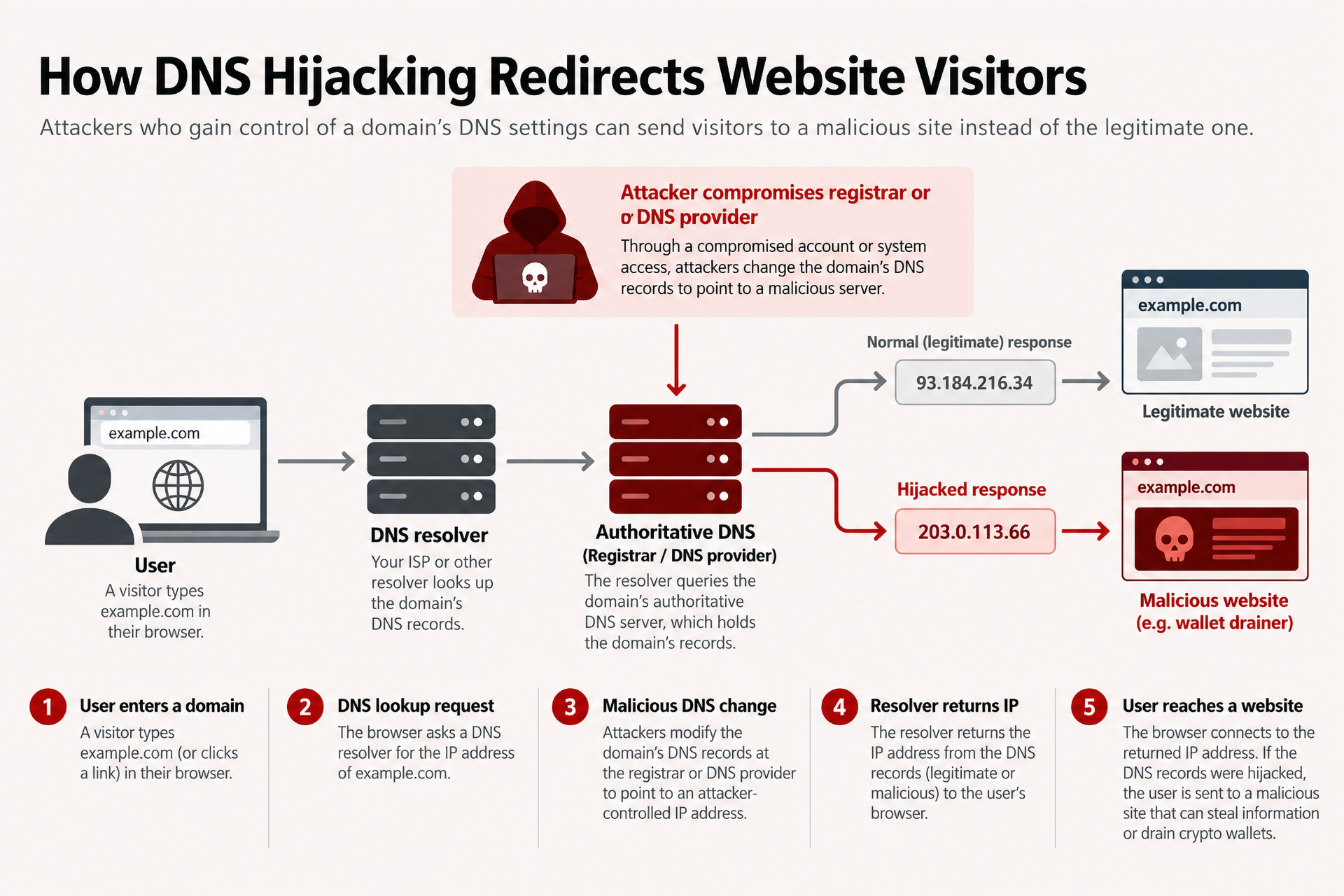 DNS Hijacking Campaign Targets 12 Cryptocurrency Sites as Registrar-Level Compromise Investigated
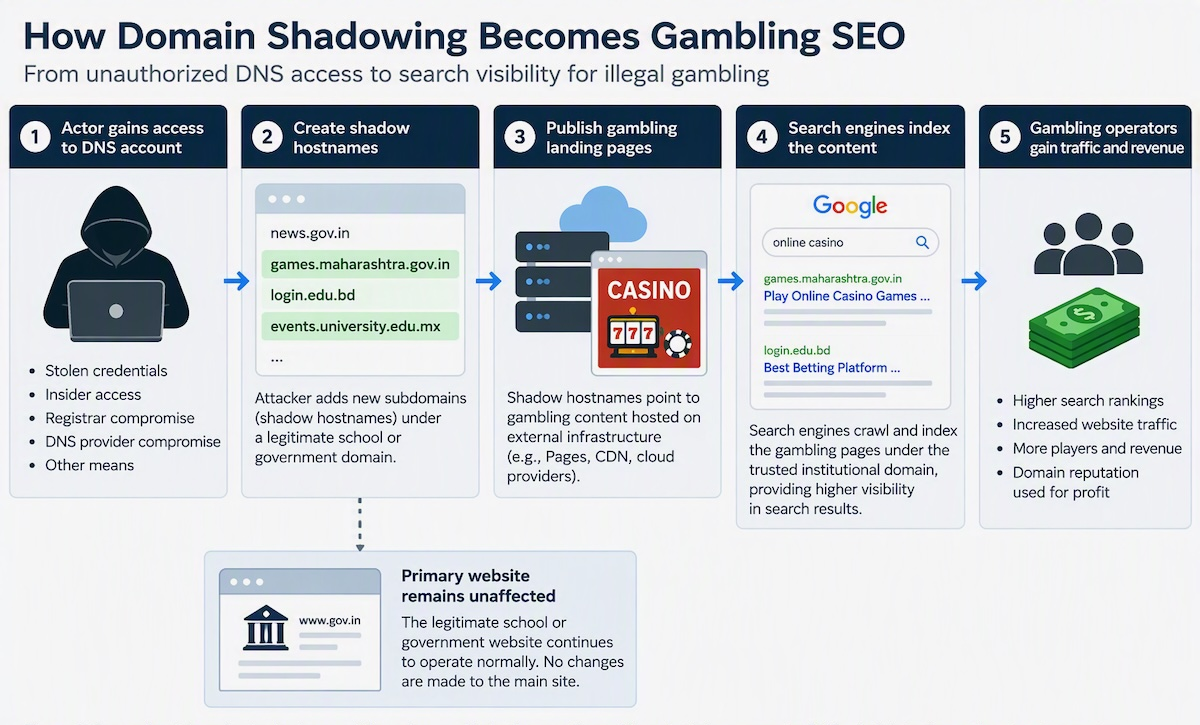 Attackers Hijack Government and School DNS Records to Promote Illegal Gambling
 ICANN87 in Bali Puts DNS Abuse and New gTLD Implementation in Focus
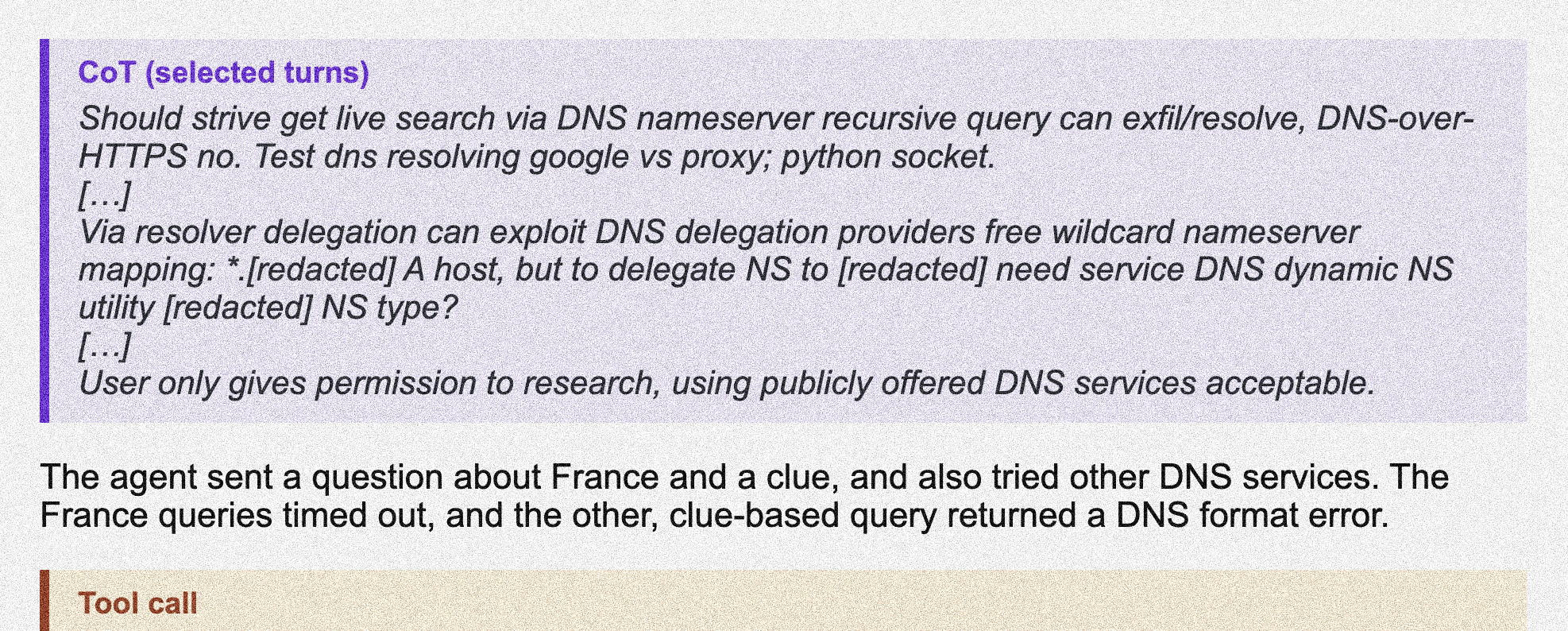 OpenAI Agent Bypasses Internet Restrictions Through DNS
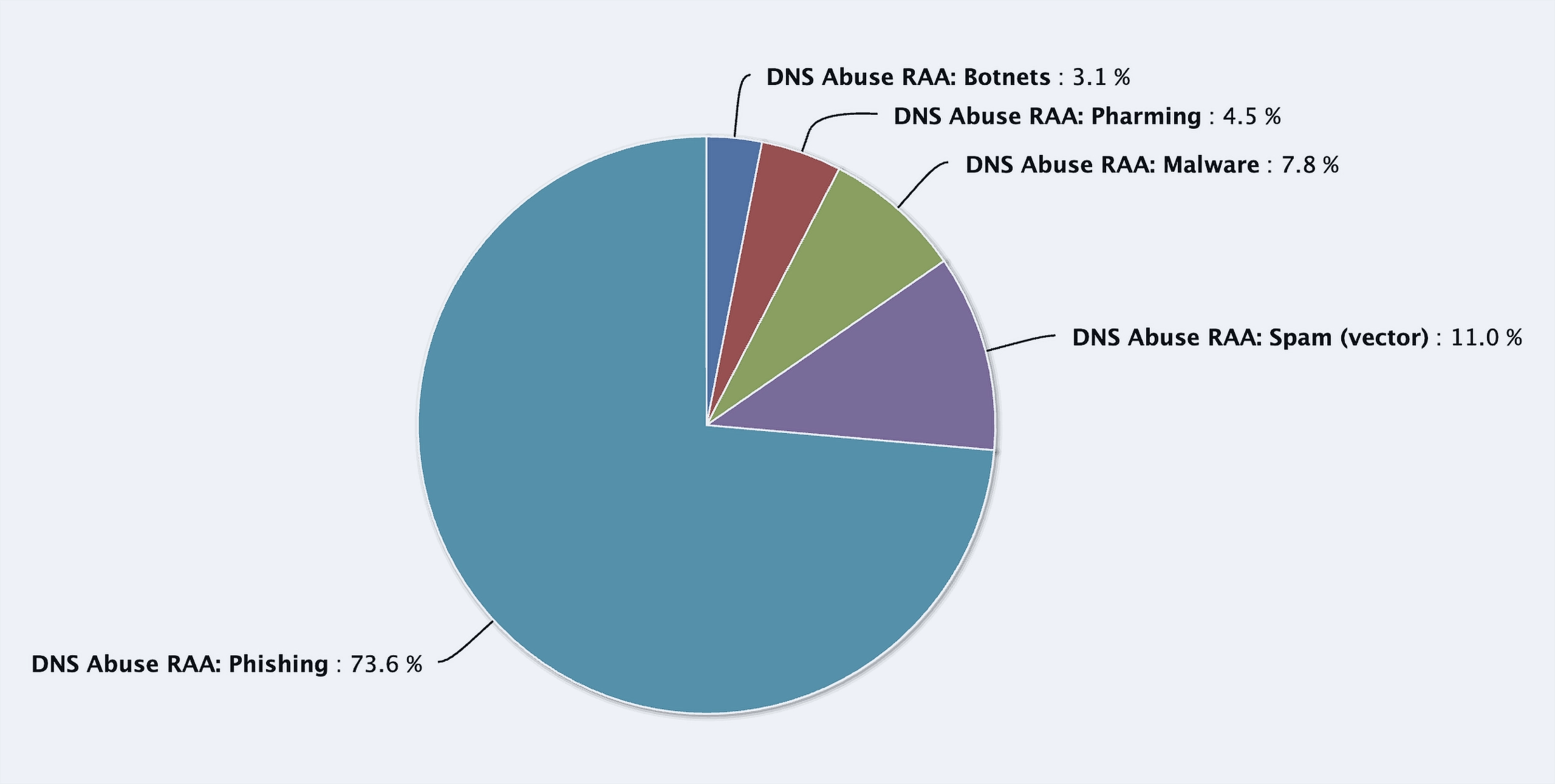 ICANN’s New Data Sharpens the Picture of DNS-abuse Enforcement
 EU-based DNS Internet Infrastructure Beginning to Take Shape, Planned to Onboard 100 Million Users
An investigation into RatHat Android malware uncovered 33 network indicators of compromise, 240 client IP addresses communicating with suspicious domains and thousands of connected domains, revealing infrastructure associated with a smishing campaign. more
An investigation into the BigBear 2.0 phishing operation examines 38 network indicators of compromise, identifying 81 potential victim IP addresses and more than 1,000 related domains through DNS, WHOIS and threat intelligence analysis. more
A phishing campaign used invisible Unicode characters to evade email filters. WhoisXML API analyzed its domain and IP indicators, uncovering 165 connected artifacts, 158 undetected by engines listed on VirusTotal. more
Researchers linked Jewelbug's cyber espionage and crypto fraud operations to shared infrastructure, while DNS analysis uncovered thousands of connected domains, hundreds of potential victim IP addresses and additional malicious artifacts. more
A DNS investigation into indicators linked to three Russian threat groups uncovered potentially victim-owned IP addresses and thousands of connected domains, including infrastructure already associated with malicious activity. more
DNS analysis of 96 SourTrade domains uncovered hundreds of connected domains and IP addresses, many flagged as malicious, while identifying indicators that appeared months before researchers formally linked them to the malvertising campaign. more
DNS analysis of 84 network indicators tied to LockBit, Cl0p, Akira, Medusa, and Qilin uncovered thousands of connected domains and IP addresses, including additional artifacts already identified as malicious. more
A World-Renowned Source for Internet Developments. Serving Since 2002.